
Understanding Maine Jumbo Loan Limits for Coastal Buyers
December 4, 2025
December 4, 2025
Shopping in Falmouth and noticing that the homes you love sit well above typical price points? If you are looking at upper-tier or waterfront properties, you may need a jumbo mortgage. It can feel complex at first, especially if you are relocating or buying a second home along the coast.
This guide explains how jumbo loans work in Maine, what the 2024 limits mean for Cumberland County, how lenders underwrite these loans, and what to expect when buying in Falmouth. You will also get a simple prep checklist tailored to coastal properties so you can move with confidence. Let’s dive in.
A jumbo loan is any mortgage that exceeds the conforming loan limit set by the Federal Housing Finance Agency. Conforming loans can be sold to Fannie Mae or Freddie Mac. Jumbo loans cannot, so banks, credit unions, and private investors set their own rules.
For 2024, the national baseline conforming limit for a one-unit home is $766,550. If your loan amount is above the limit that applies to your county, you are in jumbo territory.
Cumberland County is not typically a designated high-cost county. That means the baseline limit of $766,550 generally applies. Many Falmouth properties, especially waterfront homes, larger lots, or extensively renovated residences, exceed that level. Before you apply, confirm the current year’s FHFA limit because it is updated annually.
Jumbo lending is less standardized than conforming lending. Requirements vary by lender, and you will see more attention to your full financial picture.
Lenders usually expect strong credit, often 700 to 760+ for the best pricing. Debt-to-income ratios are typically capped in the 36 to 43 percent range. A higher score, lower DTI, and strong liquidity can improve your terms.
Expect larger down payments. Many primary residence jumbos cap loan-to-value between 80 and 90 percent. The best pricing often appears at 70 to 80 percent LTV or lower. For second homes or investment properties, maximum LTVs are usually tighter.
Jumbo programs often require bigger cash reserves. Plan for 6 to 12 months of PITI for a primary residence. Self-employed buyers, second-home purchases, or more complex files may see 12 to 24 months of reserves.
Be ready for full documentation. Employed buyers provide W-2s and pay stubs. Self-employed buyers usually provide two years of personal tax returns, and often business returns and a year-to-date profit-and-loss statement. If you rely on dividends, rental income, or stock compensation, expect detailed verification. Some lenders offer asset-depletion options for high-liquidity borrowers.
You will document where your down payment and reserves come from. That can include bank statements, investment statements, and evidence of asset liquidations. Some programs allow gift funds for primary residences, but policies vary and often require you to contribute a portion of your own funds.
Jumbo pricing moves with markets and investor appetite. It can be better, similar, or higher than conforming rates depending on your profile and timing. Your credit, LTV, reserves, occupancy, and product type all influence the quote.
Fixed-rate jumbos are common in 10-, 15-, 20-, or 30-year terms. Adjustable-rate mortgages like 5/1, 7/1, and 10/1 may offer a lower initial rate if you plan to sell or refinance within the fixed period.
Some lenders offer interest-only jumbos and ARMs to well-qualified buyers. These often require larger reserves and come with more risk. Consider how you would manage payments when amortization begins or if rates move.
Traditional mortgage insurance is rarely used with jumbos. If you want to minimize cash at closing, some buyers consider a piggyback structure, such as an 80-10-10. Availability and pricing for second liens vary and may be limited at higher price points.
Jumbo lenders apply their own overlays. One bank may allow a higher DTI with strong reserves, while another might require more down payment. Origination fees, points, and lender credits vary, so it is worth shopping several lenders and comparing both rate and total cost.
Falmouth and nearby towns like Yarmouth, Cape Elizabeth, Harpswell, and Cumberland include neighborhoods where prices often exceed conforming limits. Planning ahead helps you compete and close smoothly.
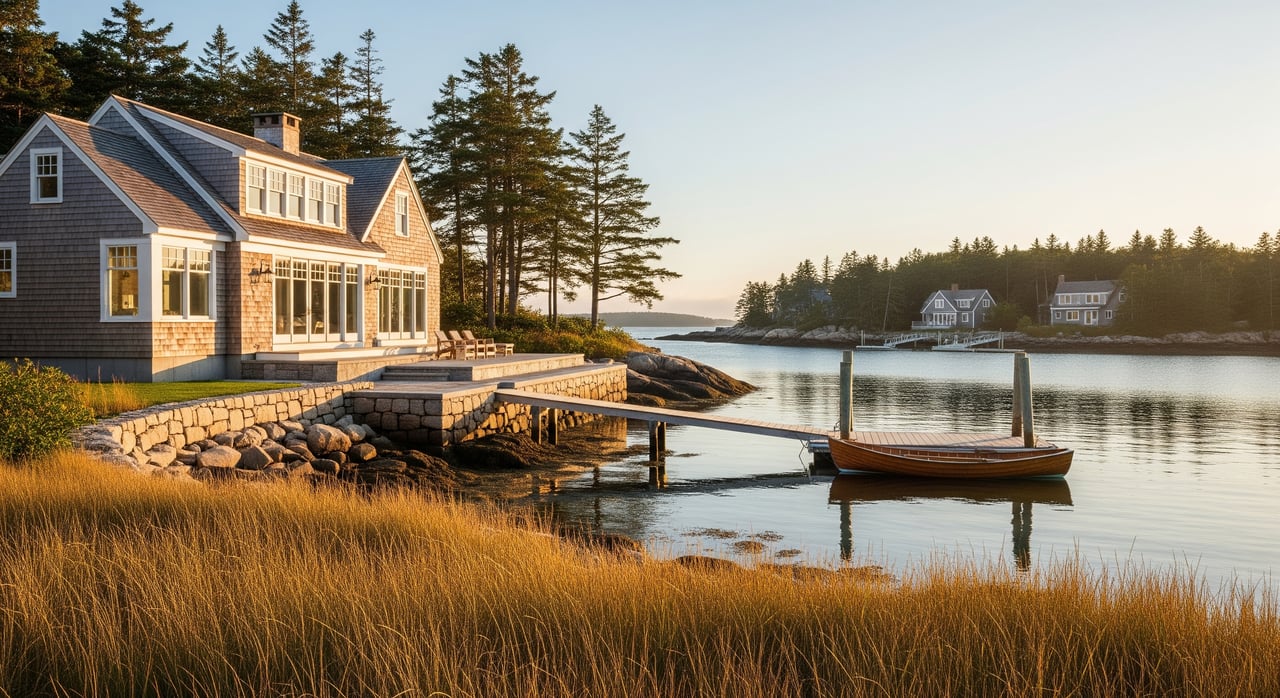
Waterfront homes, larger renovated historic properties, new construction in premium neighborhoods, and homes on larger lots commonly require jumbo financing. These properties often present unique features that matter in underwriting and appraisal.
Coastal appraisals can be challenging because there are fewer comparable sales. You may see longer timelines or requests for an expanded appraisal, a broker price opinion, or even a second appraisal at higher LTVs. Features like pier rights, seawalls, and high-end renovations can require a specialized appraiser.
Coastal Maine can be seasonal. Showings, inspections, and closings often cluster around summer months. If your appraisal pool is thin or your property is unique, allow extra time for underwriting.
High-value coastal homes often carry higher property taxes and insurance premiums. Underwriters include these costs in your qualification. If a property sits in a flood zone, expect flood insurance to be required. Confirm estimated taxes and insurance early in your planning.
Use this checklist to prepare a strong, file-ready application.
If you are exploring Falmouth, Yarmouth, Cape Elizabeth, or nearby coastal towns, having a local advocate who understands jumbo financing and coastal property nuances can make the difference. From pre-approval strategy and appraisal planning to timing your closing with seasonal conditions, you deserve a calm, well-coordinated path to the right home.
Ready to outline your plan and tour with confidence? Connect with Emilie Levecque to start a private, tailored conversation.



We place the greatest importance in our practice on being well-informed of the current market conditions here in Maine & nationwide. We gladly give our time to help train newer agents over the years as a go-to mentor at Portside. Giving back to our wonderful community & state, is the very foundation we was raised on.